


Booming market for artists and illustrators’ merchandise
WORDS Jannah Argote, Myca Guevarra, Angel Cruzada, John Edmar Pineda, Jennel Mariano

An art market is a space where artworks are bought, sold, and traded. It includes a variety of venues such as conventions, art fairs, and online platforms to showcase their creativity and acts as a foundation for building large followings and increasing visibility.
The roots of the art market can be traced back to the Renaissance period in Europe. During this time, artists like Leonardo Da Vinci and Michelangelo began accepting commissions from wealthy patrons, including noble families and the church.
Today, the art market is now influenced by technological advancements and emerging events. Online platforms and virtual sales have made art more accessible, allowing artists and collectors from around the world to connect.
Social media platforms have evolved into a vibrant hub where local digital illustrators thrive. Just like "Art Twitter" or "ArtTwt" in X, formerly known as Twitter is one of the famous communities that allow artists to connect with their audience and restore the landscape of local art markets, empowering artists to thrive both online and offline while contributing to the cultural richness of their communities.
Beyond the digital sector, the influence of social media extends into physical art markets held at diverse venues such as underground music gigs, film showings, and prestigious events like Komiket and StickerCon. These gatherings provide crucial opportunities for artists to directly engage with their audience, by selling their artwork. These markets serve as spaces where artists can network, collaborate, and gain invaluable feedback. Moreover, they play a key role in nurturing a deeper appreciation for local art forms and fostering a supportive environment that encourages artistic exploration and innovation within the community.
From comics to digital portrait, how did art market become what it is today
Art market in social media cannot be only found in Twitter/X. Before that platform, Facebook and Instagram were the leading platforms that artists use in promoting their arts. When pandemic hits, lockdowns halt organizations in having events. According to Art Basel, the estimated $50.1 billion in global sales of artwork and antiques were 22% less than in 2019. Numerous artists focused on digital art which they can sell without going outside. It caused artists to build their own communities in different social media platforms.
Social media is where artists can promote their art the best. They can reach a wider audience and interact with their clients. Their online presence also affects the value of their art. As this generation leaned more towards social media, fame became one of the crucial things they must maintain. Artists who are famous in social media tend to get more clients in digital and traditional art markets.
“Art community is naturally diverse,” Bunny, organizer and part of the Board of Directors of Komiket, said. Technological advancements have a huge impact on this diversity. Making art became accessible in a digital way which encouraged people to make art themselves. From making comics, artists became interested in graphic designing, visual development (visdev) and making video games.

Infographics by Jennel Mariano
Art market, arts and artists
Art conventions are a haven for aesthetes (people who appreciate art) and there are different organizations behind these. In 2005 Komikon was founded—an annual comic book convention. Their first convention was made for artists to have an avenue to showcase their creations, they also held art contests to provide opportunities for aspiring artists.

Likewise, the Sticker Con was established in 2018 by a group of artists once exhibitors from other art conventions and organized an art convention made solely for sticker art. In an interview from Clavel Magazines, the organizers shared their enthusiasm for stickers and the nostalgia they bring by creating and collecting stickers.
As well as Komiket is also a comic art market that launches its comics simultaneously and caters to exhibitors who create art pieces in other forms, like stickers, pins, beaded works, etc.
The art conventions mentioned above together with others, hold events that have various themes and goals, such as KPop, Anime, Indie, etc. as well as the very recent Komiket Pride during the Pride month in June where queer exhibitors were invited to showcase and sell their artworks.
Artworks’ prices depend on the style and the materials used, printed artworks such as comics amounting to a minimum of ₱600, postcards for ₱40, and pocket art like stickers can be sold for a minimum of ₱10, and pins ₱35.
Despite having art conventions left and right, profit from selling art pieces at art conventions is inconsistent based on the experience of Nadia Cruz— an artist who has been tabling at different art conventions for 3 years. “It depends on the season you choose when to sell, there are days that the sale is big and some days it's not that much”, the artist added. Yoni— a digital artist and a first-time exhibitor at an art convention, shared the same experience with Nadia “I earned 15k which just barely break-even with my capital”
Social media is also a great platform for artists to exhibit and sell their artworks. “Selling art online has more potential clients because the scope of its availability is greater but, the preparation of it is more challenging as it takes more process,” Jamylle—an artist who sells artworks online shared. As affirmed by Zyra—also an artist who sells artworks mainly on Facebook, “Selling art online makes it possible to engage with international people [customers]”.
Competition among markets and conventions
There are a lot of organizations that offer art market events for artists. On top of that, a number of aspiring artists are also booming. It creates the demand for more events for the artists. “If we look at it from an economic view, madami talagang options pero still even for 140 tables for Komiket Pride or 400 tables Mega Mall, we still get 500-700 registrations,” Bunny Luz said.
“It's booming to the point that we're being served conventions left and right,” Yoni, a digital artist, said. For artists, the art market creates an opportunity for them to sell their art. Both the organizations and the artists view it as a chance to provide a space for every artist. But despite this progress, there are still artists who are unable to secure a physical space in these events.
If more artists are tabled in an event, the competition for customers arises. For con-goers they see it as more artworks to look at and choose from. It became hard to even hit the breakeven point of their capital.
Competition happens in the physical space where the event will happen. Every month, events from different organizations take place. Huge physical spaces like Centris and Mega Mall are the most ideal places for an event. For a non-profit organization like Komiket, it is important for them to reserve a space for their next event from the money they raised from the last event. According to Bunny, the larger the space, the higher the value. Despite that, a bigger venue also means more tables for artists and more customers can come without crowding the whole space.
The venue of their Komiket Pride, which happened on June 7-19 and 14-16, was easily secured. Bunny said that it was Ayala who contacted them about having their event again in Ayala Mall the 30th. Their last event in that mall was so successful that even Ayala was the one who offered to have their events for two weeks. This event was only able to cover the venue of their two next events (PICOF, Ortigas, Mega Mall).
Cultural aspect of supporting local artists
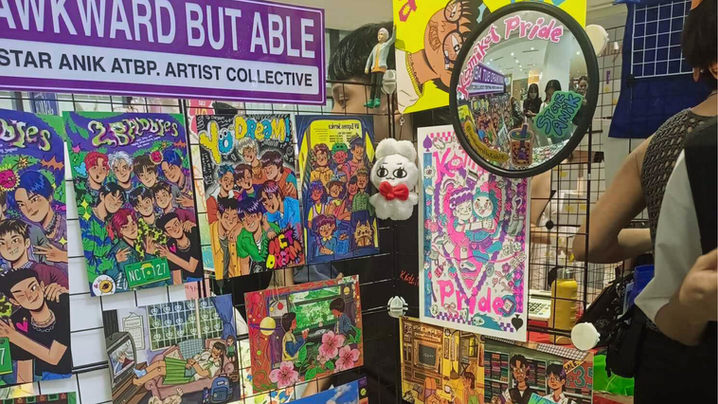
In the Philippines, cultural support for local artists is very important for fostering creativity and conserving cultural history. These events encourage the production of Filipino-inspired comics, drawings, and stickers, which strengthens the bond between creators and their audiences. Additionally, they encourage artists to explore a variety of storylines and art styles that honor the Philippines' colorful past and lively present. This fosters a sense of pride and identity in the artists.
Creating local arts and attending different art conventions of our local artists is not just about expressing their thoughts and showcasing their artistic skills. They capture the spirit of our heritage in their artwork by taking cues from customs and daily life. This also highlights the value of art and makes people know that it is not free.
Modern, abstract, and digital formats are being prioritized by emerging trends, which have changed the kinds of art that are sold in markets. To cater to modern tastes and inclinations, artists are now experimenting with new materials and techniques.
Artists have also been impacted by themes like social justice and sustainability, which represent contemporary societal issues. “Yung trabaho ko bilang NGO worker, nagbibigay siya ng puwang para maiapply ko sa mga tinitinda ko yung mga causes na pinaglalaban ko,” Nadia said. Artists like them are using their platforms in advocating any social issues. “Mas maging bukas itong space para pag-usapan ‘yung iba’t ibang issues pa, hindi lang para mag-cater ng consumerist na idea,” they added.
Furthermore, technological developments have broadened the global reach of the art market, enabling artists to interact with a variety of audiences and modify their works to satisfy changing consumer needs. The diversity and accessibility of art in today's markets are still shaped by these developments. Even in our economy, local artists and their arts play a vital role too.
By promoting tourism and small businesses, local artists who participate in events like Komiket and StickerCon make a substantial economic contribution to our community. Additionally, the revenue generated by the sale of artwork and merchandise supports the livelihoods of the artists. These artists draw attention to our diversified artistic environment and improve the country's cultural appeal by presenting their distinct talents and cultural narratives. All things considered, their involvement in these kinds of activities not only enhances our cultural tapestry but also significantly contributes to the upkeep of regional economies by boosting tourism and business.